

Skip to content
Lizora Infotech
Request Quote

Networking Basics

Industrial Ethernet Basics

Why industrial networks are built differently: environment, DC power, redundancy, and the separation of OT traffic from IT traffic on shared cabling.

  • 6 min read
  • Lizora Infotech Technical Team
  • Ready Stock
  • PAN India Supply
  • Same Day Dispatch*
  • GST Billing
  • BOQ Assistance

*Same-day dispatch applies to in-stock items ordered before cut-off from the Delhi NCR warehouse.

Overview

Industrial Ethernet uses the same protocols as office networking — the frames, VLANs, and IP addressing are identical. What differs is everything around them: temperature, power, vibration, dust, and the consequence of an outage.

In an office a network fault interrupts work. On a production line or a traffic corridor it can stop a process or blind a safety system, so industrial designs prioritise survivability over cost per port.

These are the four areas where industrial practice diverges from commercial practice.

Environment sets the specification

Commercial switches are typically rated 0–50 °C in ventilated spaces. Factory panels, roadside cabinets, and rooftop enclosures regularly exceed that, and interior cabinet temperature is always higher than outside air.

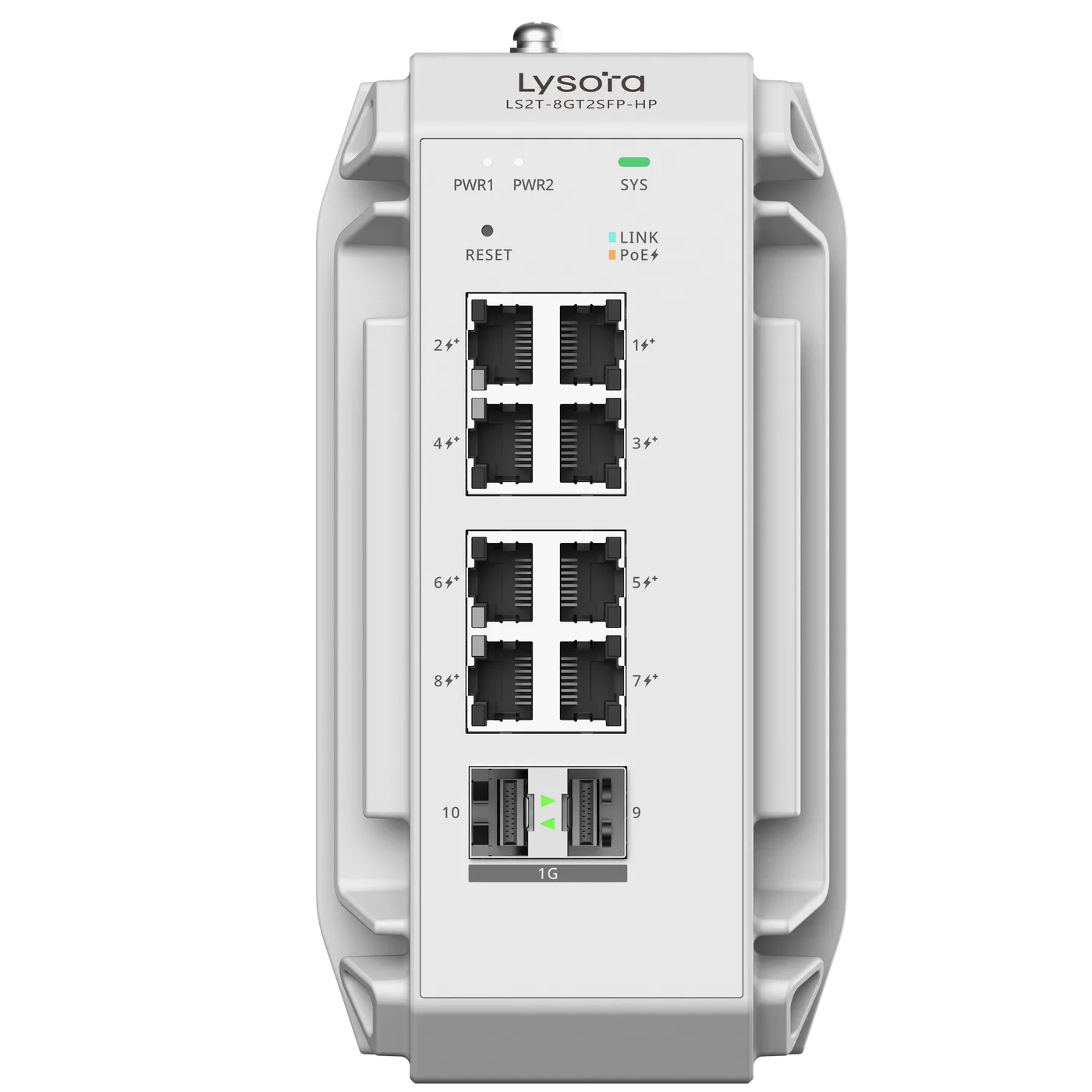
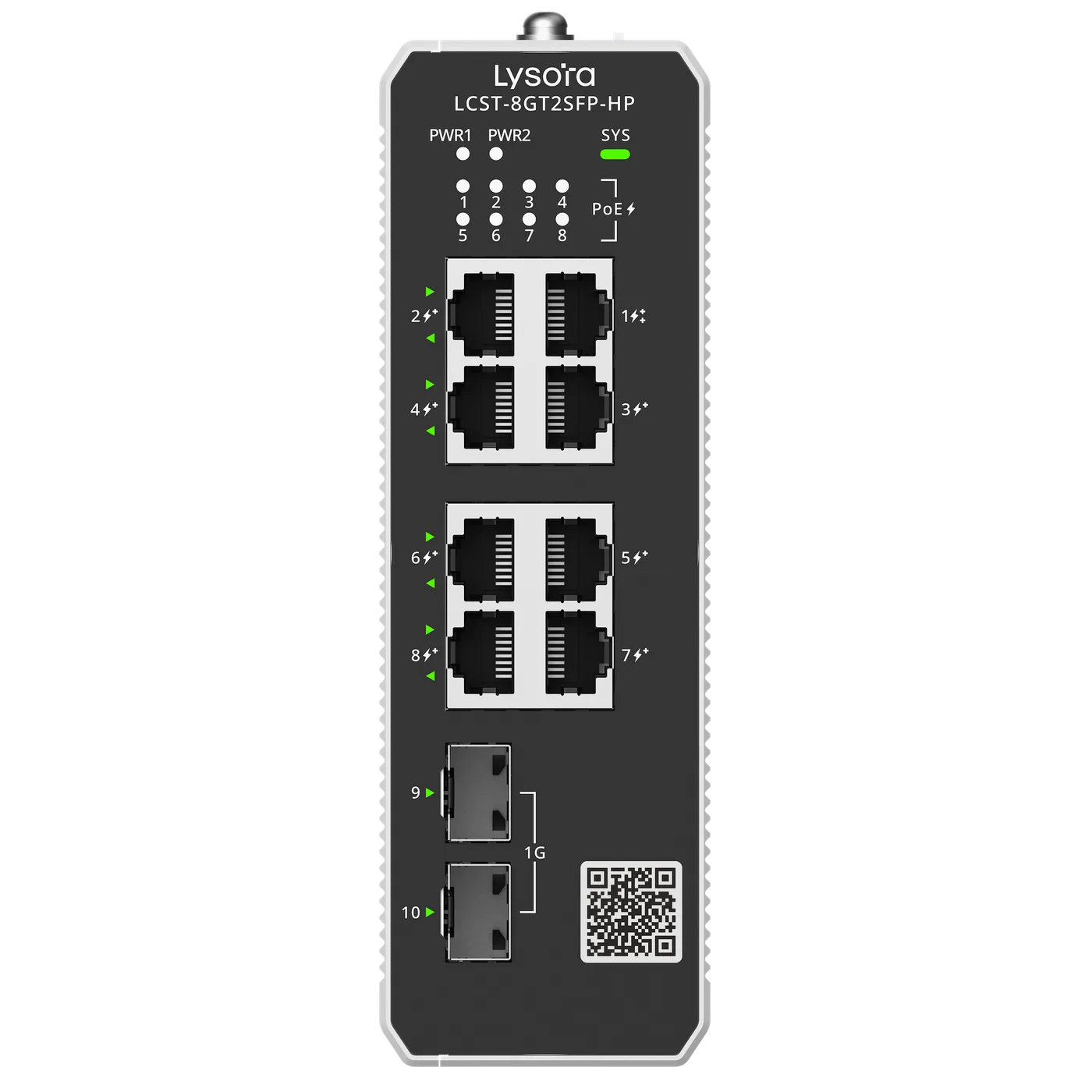
Industrial switches are specified for that reality — the LS2T-8GT2SFP-HP is rated -40 °C to +65 °C, extending to +80 °C in ventilated cabinets, in an IP40 fanless metal body.
Power comes from the panel

Industrial sites commonly distribute DC. A wide input range lets one switch run from a panel supply, a DC bus, or a solar-charged battery bank without an extra converter.

Where the switch also supplies PoE, check that the available DC voltage supports the full PoE budget — the top of the input range is often required for the rated output.

Redundancy and uptime

Industrial topologies frequently use ring or redundant-path designs so that a single cable fault does not isolate a segment. Redundant power inputs serve the same purpose on the electrical side.

Fibre uplinks are common not only for distance but for immunity: fibre carries no induced voltage between buildings with different earth potentials.

Separating OT from IT

Control traffic, camera traffic, and office traffic increasingly share the same physical cabling. VLAN segmentation keeps them logically apart so that a broadcast storm or a compromised camera cannot reach control systems.

This is why managed industrial switches are preferred over unmanaged ones at the edge, even on small sites — segmentation is not available without management.

Related Products

Equipment referenced in this guide

Models from the official Lysora catalogue that match the requirements described above.

Related Resources

Read next

  • Buying Guides

    When a commercial switch is the wrong choice, and how to specify an industrial one: temperature rating, mounting, DC input, ingress protection, and surge tolerance.

  • Networking Basics

    SFP, SFP+, single-mode vs multi-mode, BiDi and DAC explained — how to specify the right optic for a fibre uplink and avoid the usual compatibility traps.

Before You Enquire

Frequently asked questions

Is Industrial Ethernet a different protocol?

No. It is standard Ethernet — the same frames, VLANs, and IP addressing as office networks. The differences are in hardware ruggedisation, power arrangements, redundancy design, and traffic separation, not in the protocol itself.

Why is DIN-rail mounting standard in industrial cabinets?

DIN rail is the common mounting standard inside control panels, so the switch sits alongside PLCs, relays, and power supplies in the same enclosure. It also tolerates vibration better than rack ears in machinery environments.

See industrial switches

Do I need managed switches on an industrial network?

If control traffic shares cabling with cameras or IT, yes — VLAN segmentation requires a managed switch. Remote sites also benefit from management because diagnosing a fault without a site visit is usually the largest cost saving available.

Tell us what you need — get a quote today

Four fields, no account, no attachments needed. Our sales team calls back within working hours with pricing and stock status.

Send your requirement, get a quote today

Share a BOQ, a part list, or just a description of the site — our sales team responds within working hours with pricing and stock confirmation.

Prefer to talk? +91 98910 20998